Before the day trip to Roanoke Island, there was another gorgeous sunset at the campground.
Followed by the rising of the full moon over the ocean…well over the sand dunes, because I did not walk over them to watch it shine on the water…should have.
And another walk on the beach in the morning.
Everyone remembers studying about the Lost Colony in school, so it was kind of neat to see where it actually was. Unfortunately, there isn't a whole lot to see here, because the colony was, after all, lost. And still is.
The first expedition here in 1584 was exploratory, resulting in Walter Raleigh being knighted by Queen Elizabeth I, and the new land being named Virginia. The first settlement was in 1585 and was abandoned in less than a year due to the unexpected hardships. The following year John White led a group of colonists to try again. When they ran low on provisions, John White returned to England for supplies. Unfortunately, his return was delayed because England was at war and all available ships were needed in that effort. When he did finally return, everything was abandoned, and no evidence of what happened to the settlers was ever found.
Archaeologists have found the location of the earthen fort that was here and have recreated it. It is still unknown where the rest of the settlement, homes, etc. was located on the island. It may be underwater as erosion has done its work through the years.
A theater has been built by the water where productions of "The Lost Colony" story may be seen in the summer months.
Also on the grounds are the Elizabethan Gardens, created by local garden clubs in remembrance of the Lost Colony.
This was a wonderful place to visit.
The Gatehouse was designed to resemble a 16th century orangery. It was built with handmade bricks from a kiln in North Carolina.
Beautiful gate.
In remembrance...
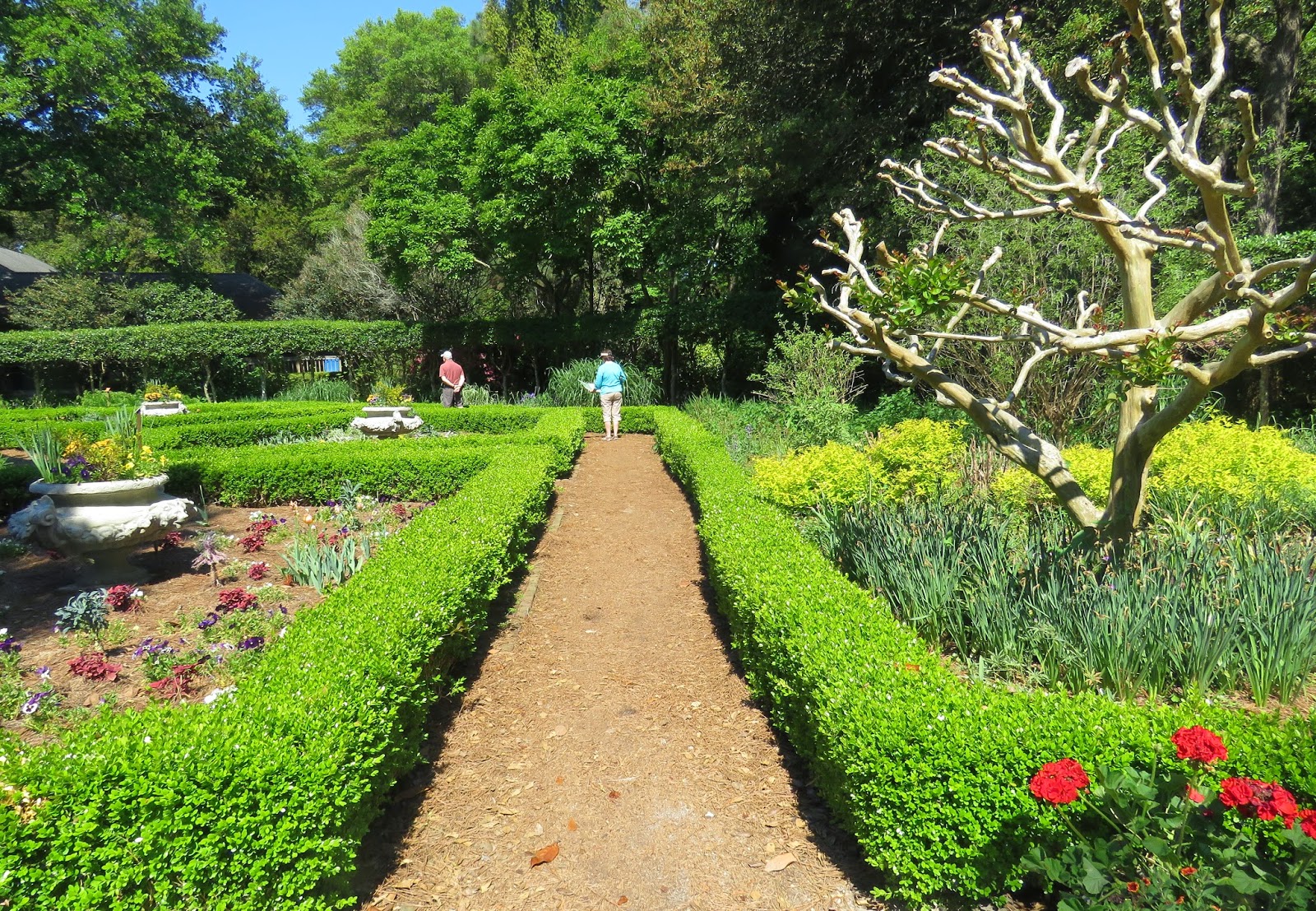
Let's stroll through the gardens...
You'll see a lot of azaleas…they were at their peak.
Placed here in 2006, this royal likeness of Queen Elizabeth I is the largest such work in the world.
This statue represents Virginia Dare, the first English child born in America…part of the Lost Colony. Born August 18, 1587. John White was her grandfather.
Lovely place for a wedding.
As you walk along here you are supposed to think about the lost colonists who walked this same shoreline so many years ago.
The is a replica of a 16th century gazebo, built with period tools and supplies. The reeds for the thatched roof came from Norfolk, England.
Nan entering the sunken garden.
A few camellias are still blooming.
Pan in a woodland garden.
A bashful girl...
This ancient Live Oak tree is believed to have been alive in 1585 the colonists first arrived on Roanoke Island.
Lion Couchant Birdbath
One of the roses in the rose garden was sent by the Queen from the Royal Rose Garden at Windsor Castle.
That particular rose bush was not identified.
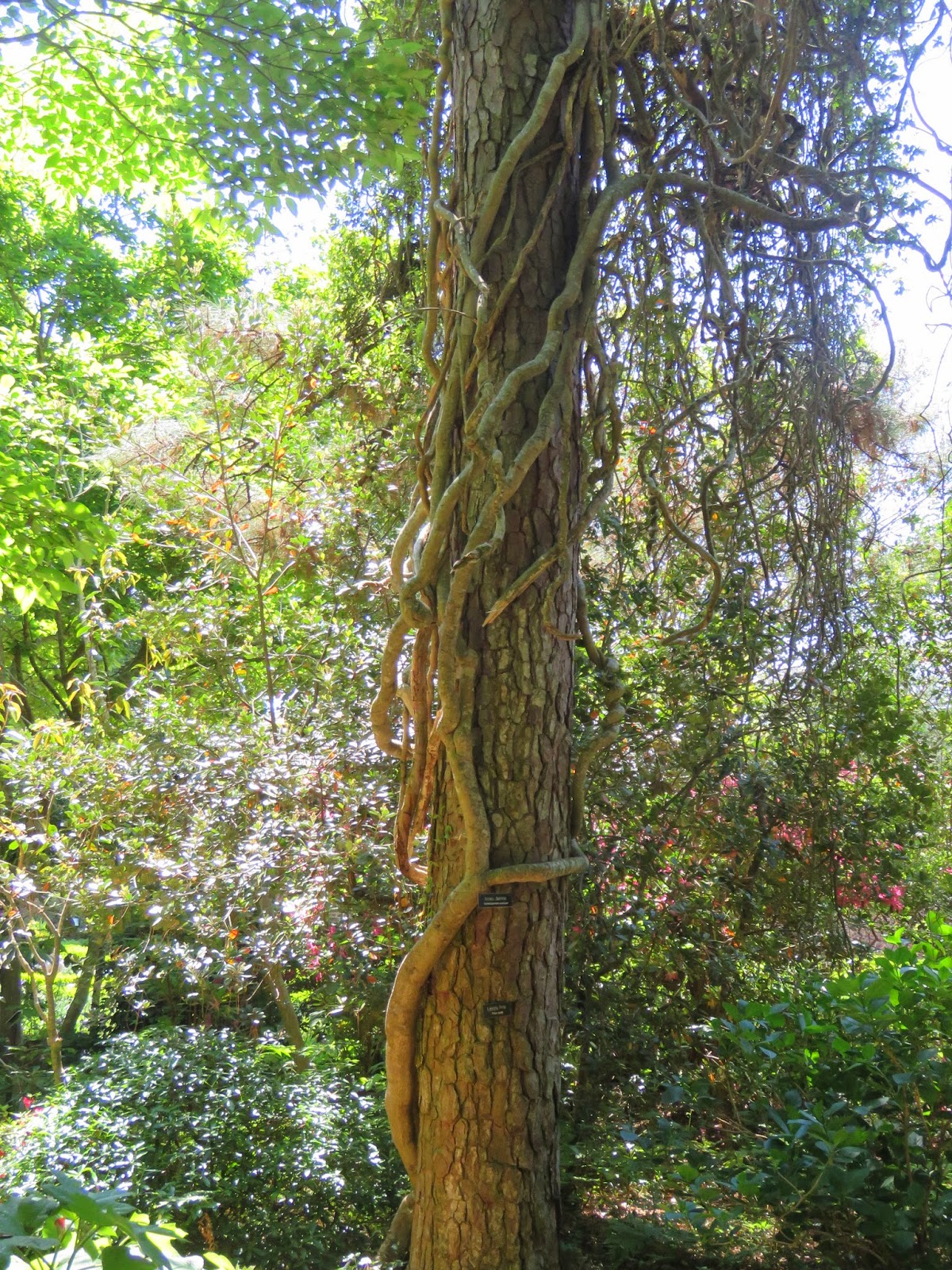
Asiatic Jasmine encircles a Loblolly Pine.
At the harbor where we had lunch, a replica of the Queen Elizabeth I that brought the colonists to Roanoke.
And my favorite item in the gift shop at the Elizabethan Gardens.